

Mysticism
33 chapters English Public domain
About this book
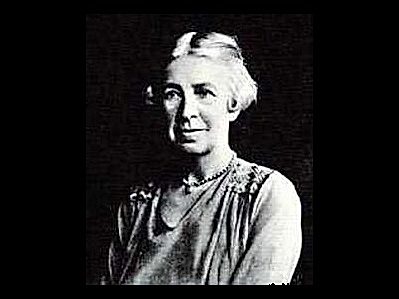
Evelyn Underhill (b. 6 Dec. 1875, d. 15 Jun 1941) was an English Anglo-Catholic writer who wrote extensively on Christian mysticism. A pacifist, novelist, and philosopher, she was widely read during the first half of the 20th century. This work, Mysticism, is not a textbook of the subject. She disagrees with William James' The Varieties of Religious Experience with his four-part division of the mystic state (ineffability, noetic quality, transcience, and passivity). She sees Bucke's Cosmic Consciousness as only the gateway to Unitative Living, about halfway there by her view (p. 193).
Underhill maps out her own view of the mystic's journey into five parts: "Awakening of Self," "Purgation of Self," "Illumination," "the Dark Night of the Soul," and "the Unitative life." Underhill is focussed on mysticism in Christianity but she also mentions Sufism, Hinduism, Buddhism, and other belief systems. This has long been considered a crucial work on the subject of Mysticism, and continues to guide seekers a century later.--J.B. Hare
Table of contents
33 chapters
Audiobook
Listen to this edition
Audiobooks are coming soon
Narrated editions will appear here when they are ready to listen.
Membership
Support the archive
$10 / month
Helps fund new texts & growth
Unlimited highlights & annotations
Unlimited bookmarks
Ad free reading experience
Early access to new features
Early access to quality TTS Audiobooks
Priority support & feature requests
4,000 Points monthly for Search usage
Access to point system rewards and value
Cancel anytime. Helps us pay the bills.
Discussion
Community conversation
Discussions are coming soon
Join conversations around this text and its interpretations.
Mysticism
33 chapters English Public domain
About this book
Evelyn Underhill (b. 6 Dec. 1875, d. 15 Jun 1941) was an English Anglo-Catholic writer who wrote extensively on Christian mysticism. A pacifist, novelist, and philosopher, she was widely read during the first half of the 20th century. This work, Mysticism, is not a textbook of the subject. She disagrees with William James' The Varieties of Religious Experience with his four-part division of the mystic state (ineffability, noetic quality, transcience, and passivity). She sees Bucke's Cosmic Consciousness as only the gateway to Unitative Living, about halfway there by her view (p. 193).
Underhill maps out her own view of the mystic's journey into five parts: "Awakening of Self," "Purgation of Self," "Illumination," "the Dark Night of the Soul," and "the Unitative life." Underhill is focussed on mysticism in Christianity but she also mentions Sufism, Hinduism, Buddhism, and other belief systems. This has long been considered a crucial work on the subject of Mysticism, and continues to guide seekers a century later.--J.B. Hare
Table of contents
33 chapters
Audiobook
Listen to this edition
Audiobooks are coming soon
Narrated editions will appear here when they are ready to listen.
Membership
Support the archive
$10 / month
Helps fund new texts & growth
Unlimited highlights & annotations
Unlimited bookmarks
Ad free reading experience
Early access to new features
Early access to quality TTS Audiobooks
Priority support & feature requests
4,000 Points monthly for Search usage
Access to point system rewards and value
Cancel anytime. Helps us pay the bills.
Discussion
Community conversation
Discussions are coming soon
Join conversations around this text and its interpretations.
Mysticism
33 chapters English Public domain
About this book
Evelyn Underhill (b. 6 Dec. 1875, d. 15 Jun 1941) was an English Anglo-Catholic writer who wrote extensively on Christian mysticism. A pacifist, novelist, and philosopher, she was widely read during the first half of the 20th century. This work, Mysticism, is not a textbook of the subject. She disagrees with William James' The Varieties of Religious Experience with his four-part division of the mystic state (ineffability, noetic quality, transcience, and passivity). She sees Bucke's Cosmic Consciousness as only the gateway to Unitative Living, about halfway there by her view (p. 193).
Underhill maps out her own view of the mystic's journey into five parts: "Awakening of Self," "Purgation of Self," "Illumination," "the Dark Night of the Soul," and "the Unitative life." Underhill is focussed on mysticism in Christianity but she also mentions Sufism, Hinduism, Buddhism, and other belief systems. This has long been considered a crucial work on the subject of Mysticism, and continues to guide seekers a century later.--J.B. Hare
Table of contents
33 chapters
Audiobook
Listen to this edition
Audiobooks are coming soon
Narrated editions will appear here when they are ready to listen.
Membership
Support the archive
$10 / month
Helps fund new texts & growth
Unlimited highlights & annotations
Unlimited bookmarks
Ad free reading experience
Early access to new features
Early access to quality TTS Audiobooks
Priority support & feature requests
4,000 Points monthly for Search usage
Access to point system rewards and value
Cancel anytime. Helps us pay the bills.
Discussion
Community conversation
Discussions are coming soon
Join conversations around this text and its interpretations.