

Sports and Pastimes of the People of England
23 chapters English Public domain
About this book
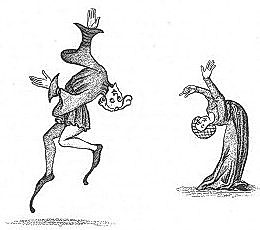
This book is a key source for information on leisure time activities in 'Olde England,' including sports, hunting, games, dancing, gymnastics, music, festivals including Christmas and May Day and customs such as Mumming, The Boy Bishop, and The Lord of Misrule. It answers questions such as "How do you score a joust?," (p. 125) "When did feral wolves become extinct in Britain?," (p. 12) and "How much do you pay the piper?" (p. 164) And what is Shakespeare talking about when he mentions Shove-Groat (p. 242) or Nine Men's Morris (p. 256)? (The modern equivalents are shuffleboard and tic-tac-toe). Included are numerous quotes from original documents and dozens of plates based on period illustrations.
Strutt documents the constant conflict between popular culture and the religious and secular powers. The 'culture war' has been going on long before modern attempts to censor videos, computer games and comic books. In 1579, under Queen Elizabeth, a Puritan writer (John Northbrooke) branded playing cards "an invention of the devill" (p. 261), and complained (p. 138) "Many can tary at a vayne Playe for two or three hours, when as they will not abide scarce one houre at a Sermon." There was a class element to this as well, with an open double standard. In 1541, a statute forbade the lower classes from bowling and other games except under certain closely supervised circumstances; however, nobles could obtain a license to bowl on their own land (p. 217). Likewise, football (p. 96) and tennis (p. 85) were at times forbidden to everyone--except the upper class.
Table of contents
23 chapters
01 Start Reading 02 p. 125 03 p. 12 04 p. 164 05 p. 242 06 p. 256 07 p. 138 08 p. 217 09 p. 96 10 Preface 11 Contents 12 List of Illustrations 13 Introduction 14 Chapter II 15 Chapter III 16 Chapter I 17 Chapter II 18 Chapter IV 19 Chapter V 20 Chapter VI 21 Chapter III 22 Chapter IV 23 Special Pages: Errata
Audiobook
Listen to this edition
Audiobooks are coming soon
Narrated editions will appear here when they are ready to listen.
Membership
Support the archive
$10 / month
Helps fund new texts & growth
Unlimited highlights & annotations
Unlimited bookmarks
Ad free reading experience
Early access to new features
Early access to quality TTS Audiobooks
Priority support & feature requests
4,000 Points monthly for Search usage
Access to point system rewards and value
Cancel anytime. Helps us pay the bills.
Discussion
Community conversation
Discussions are coming soon
Join conversations around this text and its interpretations.
Sports and Pastimes of the People of England
23 chapters English Public domain
About this book
This book is a key source for information on leisure time activities in 'Olde England,' including sports, hunting, games, dancing, gymnastics, music, festivals including Christmas and May Day and customs such as Mumming, The Boy Bishop, and The Lord of Misrule. It answers questions such as "How do you score a joust?," (p. 125) "When did feral wolves become extinct in Britain?," (p. 12) and "How much do you pay the piper?" (p. 164) And what is Shakespeare talking about when he mentions Shove-Groat (p. 242) or Nine Men's Morris (p. 256)? (The modern equivalents are shuffleboard and tic-tac-toe). Included are numerous quotes from original documents and dozens of plates based on period illustrations.
Strutt documents the constant conflict between popular culture and the religious and secular powers. The 'culture war' has been going on long before modern attempts to censor videos, computer games and comic books. In 1579, under Queen Elizabeth, a Puritan writer (John Northbrooke) branded playing cards "an invention of the devill" (p. 261), and complained (p. 138) "Many can tary at a vayne Playe for two or three hours, when as they will not abide scarce one houre at a Sermon." There was a class element to this as well, with an open double standard. In 1541, a statute forbade the lower classes from bowling and other games except under certain closely supervised circumstances; however, nobles could obtain a license to bowl on their own land (p. 217). Likewise, football (p. 96) and tennis (p. 85) were at times forbidden to everyone--except the upper class.
Table of contents
23 chapters
01 Start Reading 02 p. 125 03 p. 12 04 p. 164 05 p. 242 06 p. 256 07 p. 138 08 p. 217 09 p. 96 10 Preface 11 Contents 12 List of Illustrations 13 Introduction 14 Chapter II 15 Chapter III 16 Chapter I 17 Chapter II 18 Chapter IV 19 Chapter V 20 Chapter VI 21 Chapter III 22 Chapter IV 23 Special Pages: Errata
Audiobook
Listen to this edition
Audiobooks are coming soon
Narrated editions will appear here when they are ready to listen.
Membership
Support the archive
$10 / month
Helps fund new texts & growth
Unlimited highlights & annotations
Unlimited bookmarks
Ad free reading experience
Early access to new features
Early access to quality TTS Audiobooks
Priority support & feature requests
4,000 Points monthly for Search usage
Access to point system rewards and value
Cancel anytime. Helps us pay the bills.
Discussion
Community conversation
Discussions are coming soon
Join conversations around this text and its interpretations.
Sports and Pastimes of the People of England
23 chapters English Public domain
About this book
This book is a key source for information on leisure time activities in 'Olde England,' including sports, hunting, games, dancing, gymnastics, music, festivals including Christmas and May Day and customs such as Mumming, The Boy Bishop, and The Lord of Misrule. It answers questions such as "How do you score a joust?," (p. 125) "When did feral wolves become extinct in Britain?," (p. 12) and "How much do you pay the piper?" (p. 164) And what is Shakespeare talking about when he mentions Shove-Groat (p. 242) or Nine Men's Morris (p. 256)? (The modern equivalents are shuffleboard and tic-tac-toe). Included are numerous quotes from original documents and dozens of plates based on period illustrations.
Strutt documents the constant conflict between popular culture and the religious and secular powers. The 'culture war' has been going on long before modern attempts to censor videos, computer games and comic books. In 1579, under Queen Elizabeth, a Puritan writer (John Northbrooke) branded playing cards "an invention of the devill" (p. 261), and complained (p. 138) "Many can tary at a vayne Playe for two or three hours, when as they will not abide scarce one houre at a Sermon." There was a class element to this as well, with an open double standard. In 1541, a statute forbade the lower classes from bowling and other games except under certain closely supervised circumstances; however, nobles could obtain a license to bowl on their own land (p. 217). Likewise, football (p. 96) and tennis (p. 85) were at times forbidden to everyone--except the upper class.
Table of contents
23 chapters
01 Start Reading 02 p. 125 03 p. 12 04 p. 164 05 p. 242 06 p. 256 07 p. 138 08 p. 217 09 p. 96 10 Preface 11 Contents 12 List of Illustrations 13 Introduction 14 Chapter II 15 Chapter III 16 Chapter I 17 Chapter II 18 Chapter IV 19 Chapter V 20 Chapter VI 21 Chapter III 22 Chapter IV 23 Special Pages: Errata
Audiobook
Listen to this edition
Audiobooks are coming soon
Narrated editions will appear here when they are ready to listen.
Membership
Support the archive
$10 / month
Helps fund new texts & growth
Unlimited highlights & annotations
Unlimited bookmarks
Ad free reading experience
Early access to new features
Early access to quality TTS Audiobooks
Priority support & feature requests
4,000 Points monthly for Search usage
Access to point system rewards and value
Cancel anytime. Helps us pay the bills.
Discussion
Community conversation
Discussions are coming soon
Join conversations around this text and its interpretations.